
Posts on this site may contain brand partnerships, promotional content, or affiliate links. I may earn a commission or fee if you click a link or purchase through these recommendations at no additional cost to you.
A hands-on review of the Rent Mason Bees program—plus a sneak peek at why leafcutter bees are the summer MVPs.
Watch First—It’s THAT Easy
See how fast my family installed our spring mason bees—no special tools, no beekeeping suit, and zero drama. Once you watch, you’ll know you can do this too (and you’ll be itching to click “add to cart” for leafcutters!).
Why Solitary Bees Belong in Your Backyard
Epic pollination power – One leafcutter bee can visit thousands of blossoms a day, dusting almost every flower it touches.
Kid-friendly – They’re gentle and rarely sting (only if squished). My teens filmed the whole setup without a worry.
Bigger, tastier harvests – Tomatoes, peppers, cukes, berries…all set more fruit when solitary bees are on duty.
No honey, no hive headaches – They nest in little tubes, not giant colonies, so there’s nothing for bears—or nosey neighbors—to notice.
Mason Bees Now, Leafcutters Next
Mason bees wake up when daytime temps hit the mid-50s. They’ll be busy until early June, then it’s leafcutter time. Leafcutters need warmth—around 75 °F—to emerge, which lines up perfectly with peak veggie-garden season in Ohio.
Spring crew: Mason bees use mud to wall off their eggs.
Summer crew: Leafcutters snip tiny half-moons from rose or lilac leaves to tuck their babies in leafy “sleeping bags.”
Swapping from one species to the other is as simple as sliding out the spent block and inserting the fresh leafcutter block (it takes seconds—watch for that video once ours hatch!).
What Comes in the Leafcutter Starter Kit
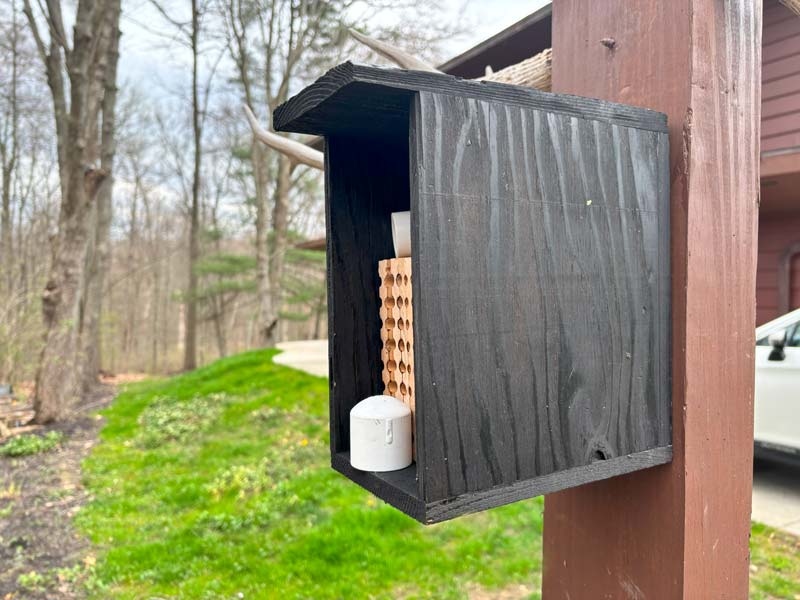
Black weather-proof bee house (re-use it every year)
Pre-drilled nesting block
60+ leafcutter cocoons (shipped dormant and safe in a chill pack)
Illustrated quick-start guide
Return label if you choose the super-easy rental option
Price: $80 with shipping included. Refill blocks cost less and fit right into the same house.
Five-Minute Setup, Five Essentials
Pick a sunny wall facing southeast so the morning sun warms the cocoons.
Mount the house 4–6 ft high—fence posts and sheds work great.
Add blooms: zinnias, borage, basil, and sunflowers keep nectar flowing.
Provide water with a shallow dish of pebbles.
Chill cocoons in the fridge until nights stay above 55 °F, then set them out and wait for the warm-weather hatch.
Renting vs. Buying—Which Fits Your Family?
Rent – Bees and block arrive, you enjoy the buzz, send the filled block back in fall. Zero cleanup, perfect for beginners.
Buy – Keep the block, harvest cocoons yourself (awesome homeschool project), store them in the garage fridge, repeat next year. For those who decide to take their beekeeping hobby a step further, Lappes Bee Supply is a helpful resource for beekeepers looking for hive equipment, protective gear, tools, and other essentials. You can browse their honey bee supplies for sale to find the equipment needed to get started or maintain an active hive.
Don’t Wait—Leafcutter Bees Ship All Summer (But They Do Sell Out)
Mason bees are already gone for 2025, and leafcutters start flying off the virtual shelves as soon as gardeners see those first tomato blossoms. Order now so your kit lands just as Ohio finally cranks up the heat.
👉 Ready to boost your harvest? Grab your Leafcutter Bee Starter Kit here.
Have questions about solitary bees—or want to share your own setup pics? Drop a comment below. I’ll be back soon with a follow-up video showing exactly how we swap our blocks and release our leafcutters. Prepare for garden magic!
Happy gardening (and bee-spotting),
