
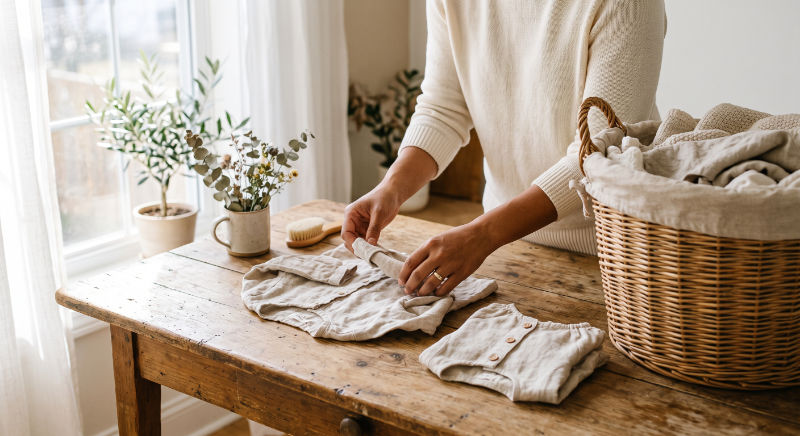
How Should Parents Wash Linen Clothes for Kids?
Linen is one of the oldest and most breathable fabrics on earth, but it’s also one of the most misunderstood at laundry time. Parents who buy linen pieces for their children often end up with stiff, shrunken, or faded garments after just a few washes, not because linen is fragile, but because standard laundry habits don’t translate to this particular fiber. Here’s the thing: getting it right isn’t complicated once you know what linen actually needs. This guide covers the right temperatures, detergents, drying methods, and ironing tricks so your child’s linen pieces stay soft, keep their shape, and last well beyond a single season. Whether you’re dealing with a breezy summer set or a structured linen shirt, the same rules apply. Follow them, and you won’t need to replace items nearly as often.
Why Linen Requires a Different Approach Than Other Fabrics
Posts on this site may contain brand partnerships, promotional content, or affiliate links. I may earn a commission or fee if you click a link or purchase through these recommendations at no additional cost to you.
Linen comes from the flax plant, and its fibers behave very differently from cotton or synthetic blends, which is why a standard wash routine can quietly cause real damage over time. A good starting point, especially if you’re building a wardrobe with quality pieces, is the Treehouse linen clothes collection, which uses OEKO-TEX certified linen designed with kids’ sensitive skin in mind. Those flax fibers are long and strong under the right conditions, but heat, aggressive agitation, and harsh chemicals are all bad news for them. Unlike cotton, linen has almost no elasticity; rough machine cycles can cause pilling, fraying, or warping at the seams. It also absorbs moisture quickly, which means detergent residue lingers in the cloth far longer than you’d expect if you use too much. That residue stiffens the fabric and dulls the color. The result is a garment that feels scratchy and looks beaten up far sooner than it should. Once you understand that, the logic behind every step of a careful wash routine becomes obvious.
The Problem With Hot Water and Heavy-Duty Cycles
Hot water is one of the fastest ways to ruin a linen garment. High temperatures cause flax fibers to contract sharply, and that contraction is largely irreversible; once a linen piece shrinks, there’s no reliable way to get it back to its original dimensions. For kids’ clothes, this is an especially painful headache, because children grow quickly and a garment that’s already a size snug becomes unwearable after one bad wash. Keep water temperature at or below 86°F, which most machines label as “cold” or “30°C.” Heavy-duty or “normal” cycles with aggressive drum spinning put serious mechanical stress on those long fibers, and over time that stress produces tiny breaks along the weave that show up as pilling or a rough texture. Select the delicate or gentle cycle instead. Most modern machines have this option, and it dramatically cuts the physical stress the fabric experiences without sacrificing cleaning power for everyday kids’ stains.
Why Detergent Choice Changes Everything for Linen
Standard laundry detergents often contain enzymes, optical brighteners, and bleaching agents built for cotton and synthetics. On linen, those additives strip away the natural fiber coating that gives the fabric its characteristic smooth feel and faint sheen. After a few washes with an enzyme-heavy detergent, linen starts to feel dull and rough to the touch. A gentle, pH-neutral detergent – ideally one labeled for delicates or natural fabrics – is what you want. Liquid detergents dissolve more evenly in cool water than powder, making them the safer pick for linen. And use about half the amount you’d use for a regular load; linen doesn’t need much soap to get clean, and less product means less residue left behind. Skip the fabric softener entirely. It sounds counterintuitive, but softener coats linen fibers with a waxy film that traps dirt and kills the fabric’s natural breathability over time. The truth is, linen gets softer on its own with each wash when you treat it correctly.
How to Wash Kids’ Linen Clothes Step by Step
Getting the process right takes only a few habit adjustments, and you’ll notice the difference in how garments look and feel after just two or three proper washes. Linen actually improves with age when treated well, softer and more supple over time, not stiffer or weaker. The key is consistency. Every time you wash, dry, and store linen clothes correctly, you add months to their usable life, and for parents who invest in quality natural-fiber pieces, that’s a meaningful return. Start by sorting linen away from heavier fabrics like denim or towels, which cause abrasion during the wash cycle. Turn garments inside out before loading them to protect any surface texture or printed details. Zip up any zippers on other items in the same load so metal components can’t snag linen threads. Small steps, but they compound over a garment’s lifespan.
Machine Washing vs. Hand Washing
Machine washing on a gentle, cold cycle works well for most kids’ linen pieces. But hand washing is the better call for structured garments – linen blazers, rompers with smocking, anything with embroidery. To hand wash, fill a clean sink or basin with cool water, add a small squeeze of gentle liquid detergent, and submerge the garment. Work it gently with your hands for two to three minutes. Don’t scrub or wring. Drain the soapy water, refill with clean cool water, and rinse until no soap remains; then squeeze the garment gently between your palms rather than twisting it, since twisting stresses the weave. For machine washing, place linen items in a mesh laundry bag before the cycle starts. This protects the fabric from the drum and from friction with other clothes. Use the shortest gentle cycle your machine offers, and skip the high-speed spin – a slow spin leaves the fabric damp rather than creased and distorted.
Drying and Finishing Linen Without Causing Damage
Never put kids’ linen clothes in a dryer on a high-heat setting. Heat causes shrinkage and weakens the fibers structurally, and repeated tumble-drying on high ages the fabric by years in a single cycle. Air-drying flat on a clean towel or a drying rack, away from direct sunlight, is the safest approach. Direct sun bleaches the natural color from linen surprisingly fast, especially in warmer months. If the garment is heavy with water, gently reshape it first, then lay it flat so gravity doesn’t pull the fibers out of alignment while it dries. So if you do need to use a dryer, select the lowest heat setting and pull the items out while they’re still slightly damp. Linen wrinkles as it dries, and smoothing garments by hand while they’re still a little moist makes ironing much easier, a warm iron on a damp linen piece clears wrinkles in seconds. Iron on the reverse side to protect the outer surface.
Conclusion
Washing linen clothes for kids isn’t a complicated process, but it does reward attention to a handful of specific details. Cold or lukewarm water, a gentle detergent, a delicate machine cycle, and air-drying are the four pillars of a routine that keeps linen soft, correctly sized, and long-lasting. And now you also know to skip the fabric softener, use a mesh laundry bag, and iron while the fabric is still slightly damp. These aren’t difficult steps, they just differ from the autopilot habits most people run on for cotton and synthetics. Once the routine is built, it takes no more time than a regular wash. The payoff is that your child’s linen pieces stay wearable and comfortable across multiple seasons rather than falling apart after a handful of washes. Good linen clothes are worth caring for properly; the process really is that straightforward.
