
Offices are often designed around function, with desks, screens, meeting rooms, and practical storage taking priority. But a workspace doesn’t have to feel purely functional. Bringing elements of nature into the office can make the environment feel warmer and more inviting without requiring a major renovation.
As Todd Kohli, Senior Principal and Landscape Architect at SmithGroup, wrote in Work Design Magazine, designers are “finding new opportunities to help clients bring the benefits of Mother Nature to the office door.”
That doesn’t necessarily mean creating an elaborate green space or redesigning the workplace. Simple additions such as desk plants, larger planters, natural materials, or better use of natural light can introduce elements of nature into an existing office.
The key is to work with what you already have. With a few thoughtful changes, even a conventional office can feel more connected to the outdoors without major construction, expense, or disruption.
Start Small with Desktop Greenery
The easiest way to bring nature into your office is to start with the space you use every day: your desk. A small, low-maintenance plant can add color and soften an otherwise clinical workspace without taking up much room.
Posts on this site may contain brand partnerships, promotional content, or affiliate links. I may earn a commission or fee if you click a link or purchase through these recommendations at no additional cost to you.
Real Simple features 30 hard-to-kill indoor plants, offering plenty of options for different office conditions and levels of gardening experience. Among its recommendations, snake plants can handle neglect and low-light corners, while bird of paradise plants add a tropical feel without requiring constant care. Parlor palms are another beginner-friendly option that can thrive with limited sunlight.
When choosing a plant, consider the natural light available at your desk and how much maintenance you can realistically manage. If you’re concerned about spills or forgetting to water, a self-watering pot can make caring for your desk greenery even easier.
Use Larger Planters to Define Your Space
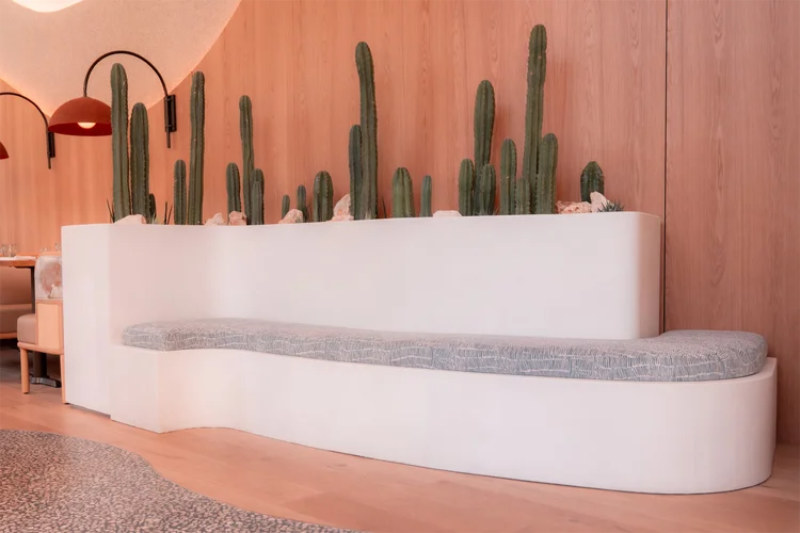
Small desktop plants only go so far. Larger planters can make greenery feel like an intentional part of the office design rather than scattered decoration. Positioned thoughtfully, they can frame an entrance, define a seating area, or separate different zones without adding walls or furniture.
They work particularly well in outdoor spaces such as patios, terraces, and employee gathering areas, where they can add greenery without requiring permanent landscaping.
However, standard outdoor planters may not always work well in these spaces, particularly when an area has unusual dimensions, limited room, or a specific layout to work around. Custom-made outdoor planters offer more flexibility by allowing the size and placement to work with the space rather than the other way around.
As PolyMade notes, commercial-size planters, long planter boxes, and indoor or outdoor planter boxes can be designed for different settings. Lightweight materials can also make larger planters easier to reposition. For outdoor use, consider durability, weather exposure, drainage, and the specific needs of the plants before choosing a container.
Use Vertical Space Instead of Floor Space
Not every office has room for rows of potted plants, making vertical space a practical way to add greenery without sacrificing walkable floor area. Wall-mounted planters, hanging holders, and modular living wall panels can work well behind reception desks, along narrow hallways, or in other areas where floor space is limited.
Some self-contained systems also use built-in reservoirs, reducing the need for extensive plumbing changes.
Vertical greenery can offer more than visual appeal. A Frontiers study found that office environments with green walls improved fatigue, attention, and relaxation compared with offices without them.
The researchers also found that the shape of a green wall influenced its effects. Curvilinear designs showed particularly strong results for fatigue recovery, while different designs produced varying effects on arousal and attention. This makes vertical greenery a practical way to maximize limited space while supporting a more restorative office environment.
Bring Nature In Through Light and Materials
Plants aren’t the only way to bring the feeling of nature indoors. Replacing harsh fluorescent lighting with warmer, daylight-mimicking LEDs can make an office feel more inviting. Natural materials such as wood, jute, stone, and woven fibers can also add warmth and texture.
If windows are available, maximizing natural light can further brighten the space and support healthy plant growth. Nature-inspired artwork featuring forests, water, or landscapes can also reinforce the connection to the outdoors.
Material choices may even influence how well employees focus. A Nature study with 54 participants found that virtual environments incorporating wood elements improved performance on cognitive tasks. Participants had a 15.3% faster response time on the Stroop test and 11.3% higher accuracy on a working-memory test.
Eye-movement data also indicated more stable attention and sustained concentration. Although the study focused on virtual environments, its findings suggest that materials such as wood may help create a more restorative workspace.
Create a Breakroom Retreat
Breakrooms are often overlooked when offices are designed, but they can be one of the easiest places to create a nature-inspired retreat. Adding a few larger floor plants can soften the space and make it feel more welcoming, while a small tabletop fountain can introduce the calming sound of running water.
Even simple changes, such as replacing harsh fluorescent bulbs with warmer lighting, can make the room feel more comfortable.
If the room has windows, position seating nearby so employees can enjoy natural light and outdoor views during breaks. A small plant-filled corner with comfortable seating can also make the space more inviting.
Encouraging employees to eat lunch or have coffee away from their desks gives them an opportunity to step away from screens and daily tasks. These small changes can make the breakroom feel distinct from the main work area and create a space where employees can genuinely pause and recharge.
FAQs
Are custom-made outdoor planters worth the investment compared to standard ones?
Custom-made outdoor planters can be worth the investment when standard sizes don’t suit your office’s layout, dimensions, or design. They offer greater flexibility in size, shape, and placement, making it easier to integrate larger plants into patios, terraces, entrances, or other outdoor areas while creating a cohesive look.
What’s the easiest way to start adding greenery in a workspace without any budget approval process?
Desktop plants are the simplest starting point. A single low-maintenance plant per desk requires no facilities involvement, no structural changes, and minimal cost, making it an easy way to test employee response before investing in larger installations.
Do living walls or vertical planters require special maintenance staff?
Most modern vertical planter systems are self-contained with built-in irrigation reservoirs, meaning they don’t require plumbing or a dedicated maintenance team. A designated employee or a monthly service visit is usually enough to keep them healthy.
Statistics at a Glance
| 54 participants | Participants took part in a study examining the effects of wood elements in virtual environments |
| 15.3% | Faster response time on the Stroop test in the wood-element group |
| 11.3% | Higher accuracy on the OSPAN working-memory test in the wood-element group |
| 3 green-wall designs | The Frontiers study compared curvilinear, linear, and polyline green walls with a no-green-wall condition |
Bringing nature into your office doesn’t require a major renovation or weeks of disruption. Small, thoughtful changes can make the workplace feel more welcoming and connected to the outdoors. A few desktop plants, larger planters on a patio, a living wall in a hallway, warmer lighting, or natural materials can all contribute to the overall feel of the space.
You don’t have to make every change at once. Start with an unused corner, a shared area, or a few workstations and build from there. Consider the light, available space, maintenance needs, and how your employees use the office when deciding what to add.
The goal isn’t to recreate the outdoors indoors, but to introduce elements of nature in ways that work with your existing space. With a few practical adjustments, even a busy, functional office can feel more inviting, comfortable, and restorative.
