
By a vehicle repair industry contributor.
Posts on this site may contain sponsored content, paid link placements, or affiliate links. I may earn a commission or fee if you click a link or purchase through these recommendations at no additional cost to you.
The storm passes, the sky clears, and you see it: dents all over your car’s hood, roof, and trunk. Hailstones form in strong thunderstorms, as NOAA National Severe Storms Laboratory explains. The damage looks bad, and figuring out how to fix it can be confusing. You have two main choices for repair. One choice is a traditional body shop. They often sand, fill, and repaint the damaged parts of your car. The other choice uses a special method to fix the metal without messing up the original paint.
Knowing the difference helps protect your car’s value. The modern way to fix hail damage repair in Denver is called Paintless Dent Repair, or PDR. This method uses special tools to gently push the metal back to its original shape from the inside. When a skilled person does it, the fix is nearly invisible and saves your car’s original paint. But the quality of the repair depends completely on the technician’s skill. A bad job can make your car look even worse.
Quick answer: Paintless Dent Repair (PDR) is usually the best way to fix hail damage. It saves your car’s original paint and keeps the metal strong. It’s very important to choose a good repair shop. The work takes a lot of skill and experience to do perfectly.
What’s inside
- How is PDR different from a normal body shop repair?
- What should I ask a repair shop?
- Will a hail damage claim make my insurance rates go up?
- How can I spot a bad repair job?
- Is it worth fixing hail damage on an older car?
- Frequently Asked Questions About Hail Repair
How is PDR different from a normal body shop repair?
PDR saves your car’s original paint and value. Normal body shop repairs involve sanding, filling, and repainting, which can lower your car’s resale price.
The biggest difference is saving the “factory finish.” This isn’t just paint. It’s a strong, multi-layer coating put on by robots in a super clean factory. It includes a special primer, the color, and a tough clear coat on top. This original paint is much stronger than any new paint job. It resists chipping, fading, and peeling better. Once you sand off that original paint, you can’t get it back.
A normal body shop has to grind off this strong paint to fix a dent. They often weld a small pin to the dent to pull the metal out. This can burn the protective coating on the other side of the panel. Then, they use plastic body filler, sand it smooth, prime it, and repaint the spot. A good painter can make it look nice, but the new paint isn’t as strong. The repair also goes on your car’s record, which can lower its value.
Paintless Dent Repair, or PDR, is a completely different way to fix dents. A skilled tech gets behind the dented panel. They might remove a piece of the car’s interior or a headlight to do this. Using special metal tools, they gently push and massage the metal back into its original shape. This works because the metal can return to its old shape and the factory paint is flexible enough to move with it. There is no sanding, no filler, and no repainting.
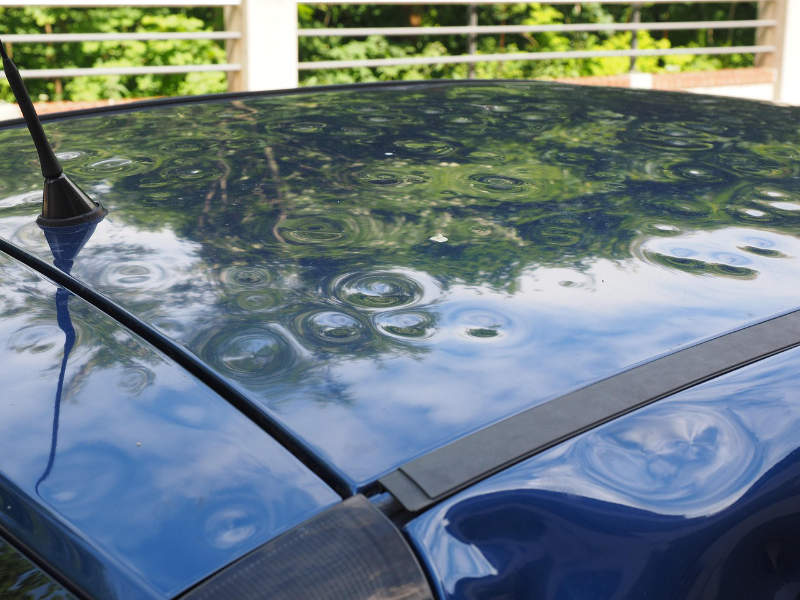
❝ To check a PDR repair, look at the reflection of something straight, like a light fixture or the sky. Move your head around. A good repair will have a clear, smooth reflection. A bad repair will look wavy or blurry, which means the metal isn’t perfectly smooth.
This difference directly affects your car’s resale value. If a car’s history report shows it has been repainted, it can be worth less when you trade it in or sell it. Buyers are often nervous about past bodywork. They worry about hidden problems or paint that doesn’t match. Because PDR doesn’t use new paint, it usually doesn’t show up as a problem on a CarFax or AutoCheck report. This keeps your car’s history clean and protects its value.
What specific questions should I ask a potential repair shop?
To find a good local shop and avoid a temporary “storm chaser,” ask about their location, how they handle insurance, and their warranty.
After a big hailstorm, companies from out of state often set up tents in parking lots. Some might do good work, but it can be risky. If you have a problem with the repair later, a temporary company might be gone, and you’ll have no way to get it fixed. A local shop with a real building is a good sign that they are stable and will stand by their work. It’s important to check out the shop before you agree to any work.
Start with these four questions:
- Do you have a permanent, physical shop? Ask for the address and check it online. A business that only works out of a temporary tent or can’t give you a local address is a big red flag.
- How do you work with my insurance company? An experienced shop will work directly with your insurance company. They should be able to handle the whole process, from the first estimate to the final payment, which saves you a headache. Be careful if a shop asks for a large cash payment before the insurance claim is approved.
- What kind of warranty do you offer in writing? A lifetime warranty on PDR work is the industry standard. This promise should cover the repair if any problems come up later, like the paint cracking or the dent coming back. Ask for a copy of the warranty.
- Can you explain how you get to the dents? A good tech should be able to explain how they will get behind a panel. For a roof, they might need to lower the ceiling fabric. For a hood, they would remove the insulation on the underside. If they can’t give you a clear answer, they might not have enough experience.
Most auto insurance policies cover hail damage under comprehensive coverage. The Insurance Information Institute says this kind of claim is for damage not from a crash. It usually doesn’t make your insurance rates go up. A good shop knows how this process works.
Use this table to compare providers:
| Evaluation Criteria | Reputable Local Provider | Potential Red Flag |
| Location | Permanent building with a real address. | Temporary tent or no local address. |
| Insurance | Works directly with your insurance. | Asks for a lot of cash upfront. |
| Warranty | Gives a written, lifetime warranty. | Only gives a verbal promise. |
| Estimates | Gives a detailed, itemized quote. | Gives a handwritten, vague price. |
In the end, a good shop will be open and patient. They should be happy to answer your questions and give clear, confident answers about their work.
Why Does Denver Get So Much Hail, and What Does That Mean for Repairs?
Denver’s location makes it a hotspot for hail. This creates a busy and sometimes confusing market for car repairs.
The city is in “Hail Alley,” an area along the Rocky Mountains known for bad storms. It starts when warm, wet air from the Gulf of Mexico moves west. When this air hits the mountains, it’s pushed up high into the cold air. The National Oceanic and Atmospheric Administration (NOAA) explains that strong winds (updrafts) hold water drops in the cold part of a cloud. This lets them freeze and grow into large balls of ice.
Denver’s high elevation is a key reason for this. Because the ground is closer to the clouds, hailstones don’t have much time to melt before they hit. A hailstone that would be just a raindrop in another city hits Denver as a hard piece of ice that can dent cars. This weather pattern happens a lot from May to August. To illustrate, Hailindex reports that in the last 10 years, NOAA’s Storm Events Database has recorded 108 hail events of one inch or larger in the Denver area, including 36 “significant” hail events of at least 1.5 inches. It creates a huge need for car repairs every year. This brings in both good local shops and temporary “storm chasers.” That’s why it’s so important for car owners here to check out a shop before hiring them.
❝ The hardest part of fixing a hail dent isn’t always how big it is, but how sharp it is. A sharp dent stretches the metal more than a wide one. Ask a tech how they fix the “crowns.” These are the raised metal edges around the dent. A good repair means tapping down these edges while lifting the center of the dent. This is a sign of a skilled tech.
The damage can also be different from storm to storm. Some storms make thousands of small, sharp dents. Fixing them takes a lot of time and care. Other storms drop bigger, softer hailstones that make deep, smooth dents. Each kind of dent needs different tools and a slightly different method to fix the panel without hurting the paint. An experienced tech can look at the damage and know just how to work the metal back to its original shape. This is why it’s so valuable to find a shop
