
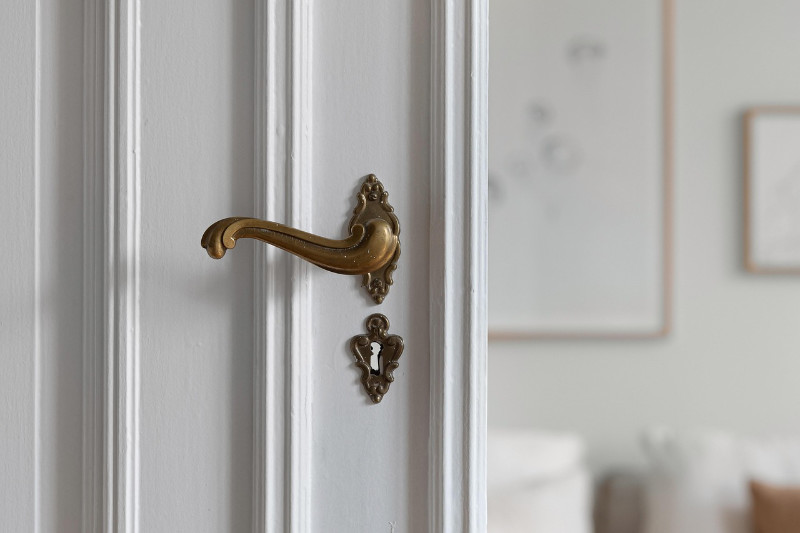
Walk into a well-designed home and you can usually tell, within seconds, whether it feels thoughtfully finished. It is rarely one dramatic feature doing all the work. More often, it is the smaller details quietly shaping your impression: the weight of a switch plate, the line of a skirting board, the way a door closes, and yes, the handle you touch before you even step inside.
Door handles sit at the intersection of design and experience. They are visual, tactile, and functional all at once. That combination gives them an outsized role in how quality is perceived. A handle can make a brand-new interior feel generic, or it can give an ordinary door a sense of craftsmanship and intention.
Why Small Hardware Has a Big Psychological Impact
People do not assess quality purely with their eyes. We read signals from touch, sound, resistance, texture, and weight. In product design, this is well understood. The same reason a heavier pen feels more expensive or a car door with a solid close sounds more refined applies in the home.
A door handle is one of the first physical interactions anyone has with an interior. Before they notice the joinery details or admire the flooring, they have already formed an opinion through contact. If the handle feels flimsy, loose, sharp-edged, or visually disconnected from the rest of the space, that sense of compromise lingers. If it feels balanced, smooth, and substantial, the room begins with a stronger impression.
This matters because perceived quality is rarely about isolated luxury. It is about coherence. When materials, finishes, and fittings all speak the same design language, the home feels elevated, even if the budget has been carefully managed.
The Role of Touch in Perceived Value
A good handle does more than open a door. It confirms that someone has paid attention.
Weight, balance, and resistance
When a handle has the right weight, it signals durability. When it turns smoothly without wobble or drag, it suggests engineering rather than basic assembly. These are subtle cues, but they shape trust. People naturally associate controlled movement and solid construction with higher standards.
Posts on this site may contain brand partnerships, promotional content, or affiliate links. I may earn a commission or fee if you click a link or purchase through these recommendations at no additional cost to you.
This is why specifiers and homeowners increasingly look beyond style alone when selecting ironmongery. They pay attention to mechanism quality, finish consistency, and how the fitting will age with use. Choosing premium architectural door fittings for homes is often less about making a decorative statement and more about creating that sense of permanence and polish that cheaper hardware struggles to deliver.
Texture and finish
Finish has a surprisingly strong effect on perceived quality. Brushed brass, satin nickel, aged bronze, or matte black each carry a different emotional tone. But beyond colour, the texture matters. A finish that feels rich and even under the hand communicates care. A plated surface that chips early or shows fingerprints excessively can quickly undermine the overall impression.
This is where quality often reveals itself over time. The best handles do not just look good on installation day; they continue to feel appropriate after months or years of regular use.
Good Design Feels Intentional
One of the clearest markers of quality is consistency. Not uniformity in a rigid sense, but a feeling that choices have been made on purpose.
Matching the architecture, not just the trend
A modern apartment, a Victorian terrace, and a country renovation each call for a different approach. Sleek linear levers may suit one setting beautifully and feel out of place in another. Likewise, ornate backplates can look characterful in a period property but overwrought in a minimalist interior.
The right handle should support the architecture rather than compete with it. When hardware suits the age, scale, and material palette of a home, the result feels settled. That is often what people mean when they say a space looks expensive: not that every element is costly, but that nothing feels accidental.
Scale matters more than most people think
An undersized handle on a heavy internal door can feel visually weak. An oversized design in a compact room can be jarring. Proportion influences quality because it affects harmony. Designers routinely use scale to create balance, yet hardware is still one of the last decisions many homeowners make.
That can be a mistake. Handles are among the most frequently used objects in the house. Their proportions should respond to the doors themselves, the height of the ceilings, and the overall tone of the interior.
Quality Is Also About Longevity
Perceived quality is not just an instant reaction. It is reinforced every time something performs well.
A loose lever, tarnished finish, or sticking latch can make an otherwise attractive home feel tired surprisingly quickly. By contrast, hardware that wears in rather than wears out contributes to a lasting sense of value. This is especially important in family homes, rental properties with higher traffic, and renovation projects where durability matters as much as appearance.
There is also a practical point here: replacing poor-quality hardware is rarely as cheap as it first seems. Labour, repainting around fittings, and the frustration of inconsistent replacements all add up. Better specification upfront often protects both the look of the property and the long-term budget.
Where Door Handles Make the Biggest Difference
Not every room needs the same level of emphasis, but some areas shape perception more strongly than others:
- The front door, where first impressions begin
- Hallway and living room doors, which set the tone for shared spaces
- Main bedroom and ensuite doors, where comfort and refinement matter
- Home office spaces, where tactile details subtly support a professional atmosphere
These are touchpoints, quite literally, where quality becomes memorable.
The Best Results Come From Thinking Holistically
Door handles work best when they are part of a wider material story. If your lighting is warm brass, your cabinetry hardware is heavily industrial black, and your door furniture is polished chrome, the home can start to feel visually fragmented. That does not mean every finish must match exactly. In fact, overly matched interiors can feel flat. But there should be some logic tying the elements together.
The strongest schemes usually share a common thread, whether that is warmth, softness, contrast, or heritage character. Door handles then stop being isolated accessories and become part of the atmosphere of the home.
Final Thoughts
The right door handle does not demand attention, yet it changes how a space is experienced. It signals care, improves daily interaction, and strengthens the subtle cues people use to judge quality.
In the end, perceived quality is built through repetition. A home feels well made when detail after detail confirms the same message. Door handles happen to be one of the few details you both see and touch, which gives them unusual influence. Choose them well, and the entire home benefits.
