
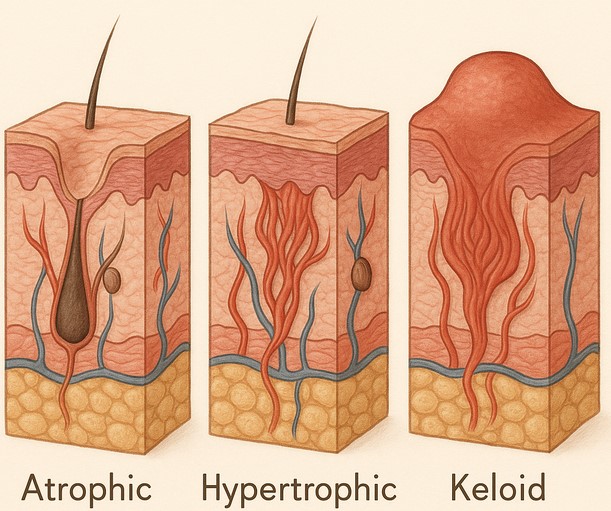
Acne might be temporary, but its scars can linger long after the breakouts fade, each telling a different story about how your skin tried (and struggled) to heal.
Not all acne scars are the same. Some leave behind shallow depressions, others form raised welts, and a few continue growing beyond the original wound. These differences aren’t just cosmetic, they reflect distinct healing responses, from underactive collagen production to overzealous tissue growth.
In aesthetic clinics across Singapore, recognising the type of acne scar is critical to delivering effective, individualised treatment. Misidentifying a scar can lead to poor outcomes, wasted time, and frustrated patients.
This article breaks down the three main types of acne scars, atrophic, hypertrophic, and keloid, and compares their causes, characteristics, and treatment approaches. Whether you’re a skin health professional or someone exploring treatment options, understanding these distinctions is the first step toward visible improvement and lasting results.
Types of Acne Scars
Acne scars are typically the result of inflammation damaging the deeper layers of the skin, specifically the dermis, where collagen resides. Depending on how the skin repairs that damage, scars can form in one of two broad categories:
1. Depressed (Atrophic) Scars
Occurs when collagen production is insufficient during the healing process, which leave behind a visible indentation or sunken area.
2. Raised (Hypertrophic & Keloid) Scars
Result from excess collagen production, where the body “overheals” and creates thickened or raised tissue that can extend beyond the original site.
Within these two groups, acne scars are further classified based on appearance, texture, and depth. Here’s a quick visual breakdown:
| Scar Category | Subtypes | Common Features |
| Atrophic | Ice pick, boxcar, rolling | Indented, shallow to deep, uneven skin |
| Hypertrophic | N/A | Raised, firm, within acne lesion boundary |
| Keloid | N/A | Raised, spreads beyond original lesion site |
Identifying the type of acne scar isn’t just academic, it directly informs the treatment approach, as each type responds differently to lasers, injectables, or other modalities.
Now, let’s explore each in more detail, starting with atrophic scars.
Atrophic Scars
Atrophic scars are the most common type of acne scars. They form when the skin is unable to regenerate enough collagen to fully rebuild the dermal structure lost during inflammation.
Posts on this site may contain brand partnerships, promotional content, or affiliate links. I may earn a commission or fee if you click a link or purchase through these recommendations at no additional cost to you.
Atrophic scars are sunken scars that result when there is insufficient collagen during the healing phase. Rather than replacing lost tissue with healthy skin, the body under-delivers, creating a visible dip or indentation in the skin’s surface.
Subtypes of Atrophic Scars
There are three main presentations of atrophic acne scars:
| Subtype | Description | Treatment Considerations |
| Ice Pick | Deep, narrow, V-shaped indentations | TCA CROSS, punch excision |
| Boxcar | Broad, well-defined edges, often on cheeks | Fractional lasers, subcision |
| Rolling | Wide, shallow depressions with soft edges | Subcision, microneedling with radiofrequency |
Each subtype reflects a slightly different healing failure, from vertical collagen collapse (ice pick) to horizontal tethering in deeper skin layers (rolling).
Why Atrophic Scars Are Challenging
Atrophic scars are not just surface-level concerns. They often involve dermal tethering, collagen loss, and poor skin texture. This makes them difficult to treat with topical solutions alone. The most effective treatments typically involve:
- Collagen stimulation (e.g. microneedling, fractional lasers)
- Subcision to release fibrous bands
- Filler augmentation to restore volume in deep scars
Because each scar behaves differently, combination therapy, tailored to scar type and skin condition, offers the best long-term improvement.
Hypertrophic Scars
Hypertrophic scars form when the skin overcompensates during the healing process, producing too much collagen. Unlike atrophic scars, which result from collagen deficiency, hypertrophic scars are raised, thickened, and remain confined to the boundaries of the original acne lesion.
These scars often appear on the jawline, chest, shoulders, and back, areas where the skin is thicker and where acne tends to be more inflamed or subjected to friction (e.g. from helmets, clothing, or repeated touching).
Characteristics of Hypertrophic Scars:
- Appearance: Raised, red or skin-toned, sometimes itchy or firm to the touch
- Onset: Typically forms within weeks of a severe breakout or skin trauma
- Growth: Stabilises over time; does not grow beyond the original wound
- Texture: Rubbery or firm due to dense collagen bundles
Why They Occur
Several factors contribute to the formation of hypertrophic scars:
- Genetics – Some individuals are more prone to raised scarring due to inherited collagen response patterns.
- High-tension areas – Skin that is constantly stretched or moved during healing is more likely to develop raised scars.
- Delayed wound healing – Infection or poor wound care can trigger excessive collagen activity.
Treatment Approaches
Hypertrophic scars typically respond to treatments that help flatten and soften the scar tissue. Common options include:
- Intralesional steroid injections – Reduce collagen production and inflammation
- Laser resurfacing – Improve texture and reduce redness
- Silicone gel sheets – Flatten and hydrate scars over time
- Pressure therapy – Especially useful in combination with other treatments
Unlike atrophic scars, the goal here isn’t to fill in or rebuild, it’s to reduce and regulate the excess tissue.
Keloid Scars
Keloid scars are the most aggressive form of raised scarring, and unlike hypertrophic scars, they tend to grow beyond the original boundaries of the acne lesion. This excessive growth is due to dysregulated collagen production, where the body’s healing response doesn’t switch off, leading to a mass of dense, fibrous tissue.
While not as common as atrophic or hypertrophic scars, keloids can be particularly distressing due to their size, colour, and tendency to recur after treatment.
Characteristics of Keloid Scars:
- Appearance: Shiny, raised, firm, and often darker than surrounding skin
- Growth Pattern: Expands beyond the initial site of injury, sometimes months after healing
- Symptoms: Can be itchy, tender, or even painful
- Common Locations: Jawline, chest, back, shoulders, ears
Keloids are more prevalent in individuals with darker skin tones, including many Southeast Asian patients, a factor especially relevant in Singapore’s multi-ethnic population.
Why They Occur
- Genetic predisposition plays a strong role; keloid formation often runs in families.
- Persistent inflammation, especially in cystic acne or untreated lesions, increases the risk.
- Skin trauma, even minor, can trigger keloid growth in susceptible individuals.
Treatment Considerations
Keloids are notoriously resistant to treatment and often recur if not managed carefully. A multi-modal approach is usually required, including:
- Corticosteroid injections – First-line treatment to shrink the scar and reduce inflammation
- Cryotherapy – Freezing the scar tissue to reduce volume (best for smaller keloids)
- Laser therapy – To reduce redness and flatten the scar over time
- Surgical excision – Only in select cases, and always paired with post-op steroid therapy to reduce recurrence
- Pressure earrings or dressings – Often used for ear keloids after excision
Due to their unpredictable nature, keloid scars are best managed early and under the supervision of an experienced dermatologist or aesthetic physician.
Key Differences at a Glance
Understanding the distinctions between atrophic, hypertrophic, and keloid scars is essential — not only for accurate diagnosis but for selecting the right treatment strategy. Here’s a side-by-side comparison to simplify the clinical and visual differences:
Acne Scar Comparison Table
| Feature | Atrophic Scars | Hypertrophic Scars | Keloid Scars |
| Appearance | Sunken, pitted, indented | Raised, firm, confined to acne site | Raised, extends beyond original area |
| Cause | Collagen loss during healing | Collagen overproduction (regulated) | Collagen overproduction (unregulated) |
| Common Locations | Cheeks, temples, forehead | Chest, back, jawline | Ears, chest, shoulders, jawline |
| Texture | Soft, uneven surface | Firm, rubbery | Firm, shiny, may feel hard |
| Time of Onset | Shortly after acne heals | Within weeks of injury | Weeks to months post-injury |
| Recurrence Risk | Low | Moderate | High |
| Treatment Strategy | Stimulate collagen, release tethering | Flatten scar, reduce inflammation | Suppress activity, prevent recurrence |
| Treatment Examples | Microneedling, subcision, lasers | Steroids, silicone sheets, lasers | Steroids, cryotherapy, laser + surgery |
Visual Model (Conceptual)
- 🕳️ Atrophic = Skin collapses inward
- 🧱 Hypertrophic = Skin builds up a wall that stays within limits
- 🏗️ Keloid = Skin builds a wall and keeps building, spilling into areas it doesn’t belong
This visual and structural understanding of scar types not only guides treatment decisions but also helps patients set realistic expectations — a key factor in improving satisfaction and long-term outcomes.
Conclusion
Acne scars may share a common origin, inflammation, but their outcomes vary drastically based on how the skin heals. Recognising the difference between atrophic, hypertrophic, and keloid scars isn’t just about classification; it’s about understanding your skin’s biological response and what it needs to recover.
- Atrophic scars reflect a deficiency, the skin didn’t produce enough collagen.
- Hypertrophic scars reflect a controlled excess, where collagen production overshoots but stays within limits.
- Keloid scars reflect a loss of regulation, where collagen production continues unchecked.
Each scar type requires a tailored strategy. While atrophic scars often need collagen stimulation and dermal rebuilding, raised scars (hypertrophic and keloid) call for suppression and reshaping.
For patients, this understanding builds trust, they no longer feel like they’re “not healing right.” For practitioners, it offers precision, improving treatment plans, communication, and outcomes.
