

Virtual schooling has become a part of daily life for many families. When students work from home, the boundaries between school and personal life often blur, leaving both children and parents struggling to stay focused and engaged. Without structured routines, even the most motivated learners can lose momentum. Families who put consistent patterns into place tend to experience fewer disruptions, smoother days, and more positive attitudes toward learning. Establishing a rhythm at home can reduce stress and create space for learning to thrive.
Take Breaks
Posts on this site may contain sponsored content, paid link placements, or affiliate links. I may earn a commission or fee if you click a link or purchase through these recommendations at no additional cost to you.
Long hours in front of a screen drain energy and affect concentration. When students go too long without stepping away from their devices, mental fatigue creeps in. Regular, timed breaks throughout the school day help reset attention and give the mind space to process information. Mid-morning and mid-afternoon are often good times to unplug briefly, stretch, grab a snack, or go outside. This practice becomes even more valuable in settings that support continuous remote learning. Many families participating in Georgia remote education for all grades have found that structured breaks improve both performance and mood. A short walk around the block, a few minutes of breathing exercises, or even tidying a small area of the room can bring just enough movement and change to return refreshed. Parents and caregivers who model the same behavior by stepping away from their screens set the tone for a balanced day.
Create a Morning Ritual
A consistent start to the day can help signal that it’s time to shift into learning mode. This doesn’t require anything elaborate. Something as simple as waking up at the same time, brushing teeth, getting dressed, and eating breakfast at a set hour each morning can make a difference. Lighting a candle or playing a certain kind of music can turn the same space into a more calming or motivating environment. Families might talk together about what’s on the schedule for the day, review assignments, or just check in on how everyone is feeling. These short moments ground students in a routine that reduces anxiety and sets a tone of stability.
Over time, morning rituals help the brain associate certain actions with learning. A child who puts on shoes every day, even without leaving the house, may feel more mentally prepared to sit at a desk or log into a virtual class. The goal isn’t perfection. Some mornings will still feel rushed or chaotic. What matters is consistency and the shared understanding that the day begins in a way that supports focus and structure.
Design a Dedicated Learning Space
Children learn better when their workspace feels separate from the places they relax or play. This doesn’t mean every family needs a spare room or a full desk setup. Even a small table with a chair in a quiet corner can make a difference when it’s used consistently for schoolwork. Keeping supplies nearby, such as pencils, notebooks, chargers, or headphones, helps reduce the scramble before class starts. If the space is shared with others, consider using baskets or bins that can be tucked away at the end of the day to keep the area organized.
Lighting matters, too. Natural light helps improve mood and alertness. If that’s not possible, use a lamp with warm tones to create a comfortable atmosphere. Let children personalize the space with a drawing, photo, or calendar. This sense of ownership makes it more inviting and signals that this is their zone for learning. Families who invest a little time in creating a designated area often find that children settle in more quickly and stay focused longer.
Set Clear Start and End Times
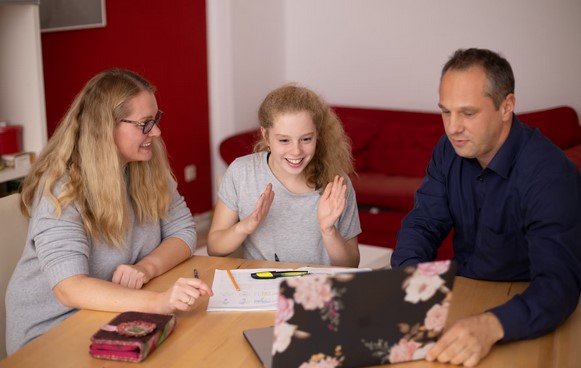
When school takes place at home, the school day can begin to stretch in all directions. Without clear boundaries, students might feel like they’re always at school, or never truly in it. One way to help create a sense of normalcy is by establishing set start and end times. Decide when the learning day begins and when it ends, even if some tasks or assignments can be completed independently.
This routine helps children anticipate transitions and manage their time. Knowing that school starts at 8:30 and ends at 3:00, for instance, provides structure and gives meaning to other parts of the day. Lunch breaks, quiet reading time, and physical activity can all be scheduled around the formal school hours. When the end of the school day arrives, have a small routine that signals it’s time to switch gears, closing a laptop, turning off a desk lamp, or putting away books. These moments mark the transition and give children permission to rest, play, or shift focus.
Virtual learning invites families to think differently about how the school day functions. These practices don’t require perfection. What matters most is the commitment to consistency, care, and the shared effort to support learning as a daily part of life.
