
Posts on this site may contain sponsored content, paid link placements, or affiliate links. I may earn a commission or fee if you click a link or purchase through these recommendations at no additional cost to you.
Summer in Akron means kids on bikes, sprinklers going full blast, and dogs lounging on every other front porch. It’s also the season when dog-bite incidents spike, which makes this the right time to talk about keeping your family safe. The USPS Dog Bite Awareness Campaign, every June, is aimed at protecting mail carriers, but the safety lessons translate directly to families with young kids.
The numbers from this year’s campaign are hard to ignore: over 5,200 postal employees were attacked by dogs nationwide in 2025 alone. Ohio ranked third that same year, with 287 reported incidents involving postal workers. Think about that for a second: these are trained adults who visit homes every single day, and they’re still getting bitten at alarming rates. If the professionals are struggling, it’s worth teaching your kids a few basic safety habits before they head out the door.
Why Summer Changes the Way Kids and Dogs Interact
More Freedom, More Visitors, More Surprises
Summer break blows up the normal routine. Kids are home from school, bouncing between friends’ houses, and spending hours outside with no set schedule. That constant stream of unfamiliar faces at the front door, open backyard gates, loud scooters, and bouncing basketballs creates an environment that can genuinely stress pets out. Even a dog your kids have known since it was a puppy can get overwhelmed by the sudden jump in noise and unpredictable movement.
This seasonal spike in activity is exactly why safety advocates emphasize proactive education, such as understanding Ohio’s Avery’s Law, which focuses on training children how to safely interact with animals to prevent preventable bites.
Friendly Dogs Can Still Get Overwhelmed
Most bites don’t happen during dramatic situations. They happen during ordinary moments, often because a dog is simply reacting out of fear or excitement. Animal behavior experts and USPS officials warn that friendly dogs can turn aggressive when startled or guarding their territory. The official USPS campaign theme puts it well: never turn your back on dog bite prevention. That applies whether you’re a mail carrier or a parent watching kids play in the yard, regardless of how sweet the dog normally acts.
| Summer Situation | Why Risk Goes Up | Safer Parent Move |
| Package or mail delivery | Dog gets excited or protective at the door | Put the dog in a closed room before opening the door |
| Playdate at your house | Kids run, squeal, grab toys, and forget boundaries | Supervise closely and create dog-free zones |
| Visit to a friend’s house | Child may assume every dog likes touch | Ask the owner for rules before kids approach |
| Evening walk | Busy sidewalks and bikes can overstimulate dogs | Keep leashes short and avoid crowded routes |
| Backyard play | Open gates and roughhousing can trigger chasing | Check gates and separate dogs from chaotic games |
Simple Rules Every Kid Should Know Before Heading Outside
Dog-Safety Rules That Actually Stick
You don’t need a thirty-minute lecture. Short, repeatable rules work best, especially with younger kids. Here are the ones worth drilling before every playdate and neighborhood outing:
- Ask before you touch any dog. Even if your child adores dogs, they need to stop and ask the owner first. Every single time.
- Let the dog come to you. No rushing up, no reaching over the head, no chasing.
- Never hug, climb on, or kiss an unfamiliar dog. Kids naturally show affection this way, but many dogs find it stressful and threatening.
- Keep your face away from a dog’s face. This one simple habit can prevent the most serious kinds of injuries.
- Don’t bother a dog that’s eating, sleeping, hiding, or caring for puppies.
- Freeze and stay still if a loose dog approaches. No screaming, no running. Stand like a tree.
- Tell an adult right away if a dog seems scary, loose, or upset.
Practicing these before heading to a friend’s house helps kids actually remember them in the moment. Try a quick role-play with younger ones; it keeps the tone calm and educational instead of scary. Sound silly? Maybe, but ask any pediatric ER nurse, and they’ll tell you the kids who freeze rather than run usually come out of a dog encounter much better off.
How to Make Common Summer Situations Safer
At the Front Door During Deliveries
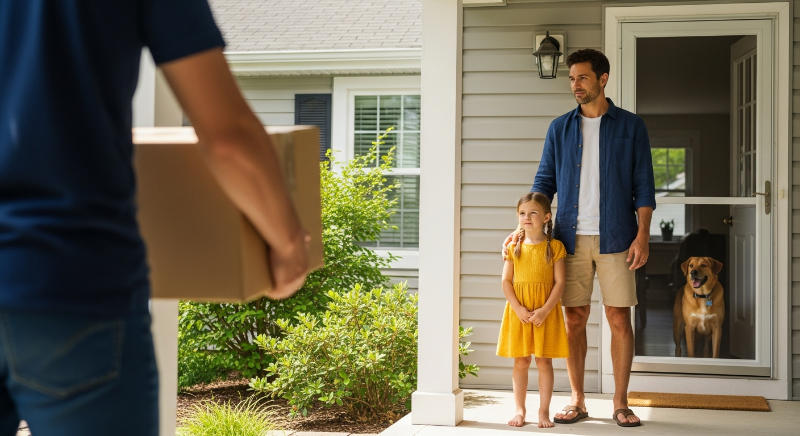
Your porch sees a lot of action during the summer, and that’s exactly why the USPS recommends securing dogs during deliveries by keeping them in a separate, closed room before you open the door. Kids shouldn’t race the delivery driver to the porch or try to grab packages while the family dog is loose nearby. Postal officials also stress that you should avoid accepting mail directly from a carrier when a dog is present, because the animal may read that exchange as a threat to its space.
On Walks in Busy Akron Neighborhoods
Evening strolls through neighborhoods like Ellet, Firestone Park, or Highland Square call for secure leashes, especially when sidewalks are packed with families enjoying the warm weather. If your child wants to walk the family dog, an adult should still hold the leash for any large, strong, or reactive dog. Keeping the leash short and giving other pedestrians extra space reduces overstimulation and keeps everyone on the block safer.
At Playdates and Backyard Hangouts
Before dropping your child off, ask the hosting parents whether a dog will be out during the playdate. Assuming a pet is “good with kids” doesn’t mean it needs zero supervision (you’ve probably heard that reassurance before, right?). High-energy activities like bouncing on trampolines, throwing water balloons, and roughhousing can trigger a dog’s prey drive, making physical separation an important safety measure.
On rainy days, you might channel that energy indoors with projects like painting clouds on the ceiling, but when the sun’s out and play moves to the yard, pick up food scraps and high-value chew toys. Those items can spark resource guarding, even in otherwise mellow dogs.
At Another Family’s Home
When visiting someone else’s house, ask the pet owner whether kids should ignore the dog at first and let the adults manage the introduction. It also helps to ask whether there’s a specific room or crate the dog uses to decompress, and whether there are any known triggers the children should avoid. Teach your kids never to corner a dog or follow it into another room; the pet needs escape routes to feel secure.
What Dog Body Language Should Make You Pause?
Stress Signs Kids Usually Miss
Most canine warning signs are subtle and show up well before a dog growls or snaps. Watch for a stiff body, a tail held very high and rigid, or ears pinned flat against the head. Other easy-to-miss anxiety cues include lip licking when no food is around, yawning when the dog isn’t tired, and “whale eye” (that’s when you can see the whites of a dog’s eyes, and it usually means the animal is uncomfortable or on edge).
When to Step In Immediately
Calmly create space if a dog freezes while your child is nearby; freezing is a major signal that the animal feels cornered or threatened. Step in right away if a child keeps approaching after the dog has moved away, or if there’s any competition over food, toys, or a spot on the couch. You don’t need to be an animal behaviorist here. If the dog looks tense, unusually still, or trapped between a person and a wall, just end the interaction. Better an awkward moment than a trip to urgent care.
If a Bite or Scratch Happens, Focus on Health First
Immediate Steps Parents Should Take
If something does happen, move the child to safety and wash any minor wounds thoroughly with soap and water. Seek medical care right away for punctures, facial bites, heavy bleeding, or any bite involving a very young child. Once your child is safe and getting treatment, gather the dog owner’s contact information, ask about the dog’s rabies vaccination status, and report the bite to local authorities or animal control.
Take clear photographs of the injuries and keep records of every medical visit. This matters more than you’d think; experts report that dogs bite roughly 17,000 Ohioans per year severely enough to require medical attention or law enforcement involvement.
Where Ohio Families Can Learn About the Legal Side
Once the immediate medical concerns and official reporting are handled, some families may want to learn more about how liability works in dog-bite cases. Ohio has specific statutes covering owner responsibilities and strict liability, including newer legislation that many parents aren’t even aware of. A helpful starting point is understanding Ohio’s Avery’s Law and how it may affect a family’s options after a bite. Regulatory frameworks can alter unexpectedly. Tracking your disbursements precisely and reviewing recent state laws in advance will provide a much more transparent view of your legal position.
A Safer Summer Starts with a Few Calm Routines
Keeping kids safe around dogs this summer mostly comes down to adult preparation, active supervision, and teaching your children a handful of repeatable boundary rules. Dogs and kids absolutely can coexist safely and happily when parents plan ahead and respect an animal’s need for space. So what’s worked for your family? Drop your best dog-safety tip in the comments below.
