
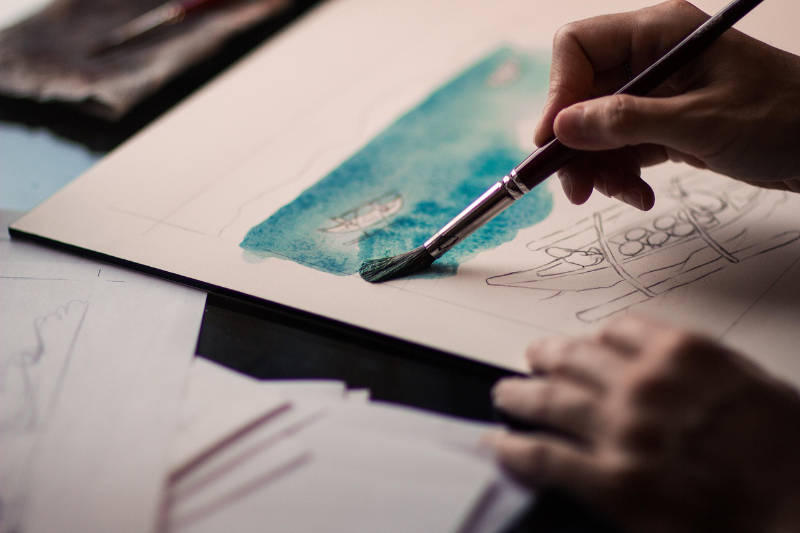
Creative Time Is a Healthy Break From Screens
Screens have a way of filling every spare minute. We use them for work, messages, shopping, news, and entertainment. I sometimes pick up my phone to check one thing and return twenty minutes later with no memory of what that thing was.
There is nothing wrong with watching a series or reading something online. The problem starts when almost every part of the day involves the same glowing rectangle. After several hours of switching between emails, videos, and notifications, the mind can feel busy even when the body has barely moved.
A creative hobby offers a different type of attention. Your hands work on one physical task, and the project changes slowly in front of you. There is no new post every few seconds. You can focus on one color, one shape, or one small section without wondering what you are missing elsewhere.
This slower pace can help create a boundary between work and personal time. I find it easier to stop thinking about unfinished jobs when I have something practical to do after dinner. Even twenty minutes can be enough. The project does not need to be impressive, and nobody needs to see the result.
Creative activities also remove the pressure of a blank evening. Instead of scrolling because you cannot decide what to do, you can return to a project that is already waiting. It stays exactly where you left it. It does not need an update, a password, or permission to send notifications.
The right hobby should fit your space and schedule. A huge project may look exciting, but it can also take over the dining table for weeks. Smaller projects are easier to store and finish. Good lighting and a comfortable chair matter more than a cupboard full of expensive supplies.
A hobby will not solve every source of stress. It can still give the mind a useful pause and make an ordinary evening feel less repetitive. That is a fair result from a few quiet minutes and a table that is temporarily free of phones.
Diamond Painting Is Art Made One Gem at a Time
Diamond painting creates a picture from hundreds or thousands of small resin drills. The canvas has a printed design, a layer of adhesive, and symbols that match specific colors. You pick up each drill with an applicator pen and place it over the correct symbol.
The method sits somewhere between a mosaic, cross-stitch, and a puzzle. You do not need to draw or mix colors. The canvas gives you clear instructions, but your hands complete the image one small piece at a time.
A basic kit usually contains the printed canvas, drills, wax, an applicator pen, and a grooved tray. Some kits also include tweezers, spare bags, or extra applicator tips. The drills normally arrive in labeled packets, although opening every packet at once is a brave decision best made far away from children, pets, and elbows.
Round drills are usually easier for beginners because you do not need to line up their sides. They leave tiny spaces between pieces, but they can be placed quickly. Square drills fit closely together and produce a fuller mosaic surface. They need straighter rows and a little more patience.
Posts on this site may contain sponsored content, paid link placements, or affiliate links. I may earn a commission or fee if you click a link or purchase through these recommendations at no additional cost to you.
This clear process makes diamond painting for adults suitable for people who want to make something without starting from a blank canvas. You work with one color at a time and see the image appear gradually. Finishing a small section gives you a clear stopping point, which is useful when you only have half an hour.
My first practical lesson was to uncover only a small part of the adhesive canvas. I once exposed far too much because I thought it would save time. It collected dust, a loose thread, and enough hair to suggest that the family cat had joined the project. The protective sheet exists for a reason.
A shallow tray helps turn the drills into the correct position. A small shake usually makes several pieces settle with their flat sides down. You can then touch the wax-filled pen to the rounded top of a drill and move it onto the canvas.
Simple storage also prevents frustration. Small resealable bags or labeled containers keep each color separate. It is worth checking the symbol before changing colors, since similar shades can look almost identical under weak evening light. A light pad placed under the canvas can make crowded or dark symbols easier to read.
Comfort matters during longer sessions. Place the canvas high enough that you do not need to bend your neck for an hour. Stretch your shoulders, rest your eyes, and stop before your back starts filing an official complaint.
Diamond painting has a few less charming moments. Drills can spill, wax can dry out, and rows sometimes wander away from a straight line. Large designs also take longer than their product images may suggest. The process works best if you enjoy gradual progress rather than quick results.
Once finished, the picture can be framed, mounted, given as a gift, or stored flat in a portfolio. Some people seal their work, while others leave it as it is. The right choice depends on the drills, the adhesive, and how the piece will be displayed.
Painting and Puzzles Are Other Hobbies Worth Trying
Diamond painting is not the only practical way to spend less time online. Other hobbies offer different levels of guidance, mess, and creative choice.
- Paint by numbers uses marked sections and matching paint colors. It gives beginners a clear plan while still allowing some freedom with blending and small details.
- Jigsaw puzzles turn observation into a quiet challenge. You search for edges, colors, and shapes until the pieces begin to connect.
- Cross-stitch uses thread and a pattern to build an image from small stitches. It suits people who enjoy precise, repeated movements.
- Crochet transforms yarn into practical or decorative items. The first row can test your patience, but basic stitches soon become easier.
- Coloring books require little preparation and are easy to store. They also create less cleanup than most crafts involving paint or glue.
- Air-dry clay can be shaped into ornaments, bowls, or small figures without special equipment.
Paint by numbers may appeal to someone who wants more contact with paint and color. The numbered areas provide enough structure to make the first step easy. You can follow the guide closely or change a few details once you feel more confident.
Puzzles offer a different experience because you assemble an existing image instead of making one with craft materials. They work well alone or with family members. Oddly, everyone becomes interested when only six pieces remain, including the person who ignored the first 994.
The best choice depends on your available time, storage space, and tolerance for tiny objects on the floor. A small coloring book suits short sessions. A detailed canvas or large puzzle can fill several weekends.
You do not need to turn a hobby into a goal, side business, or public achievement. It can remain a simple part of the day that belongs only to you. Sometimes a table, a quiet task, and thirty minutes without scrolling are more than enough.
