
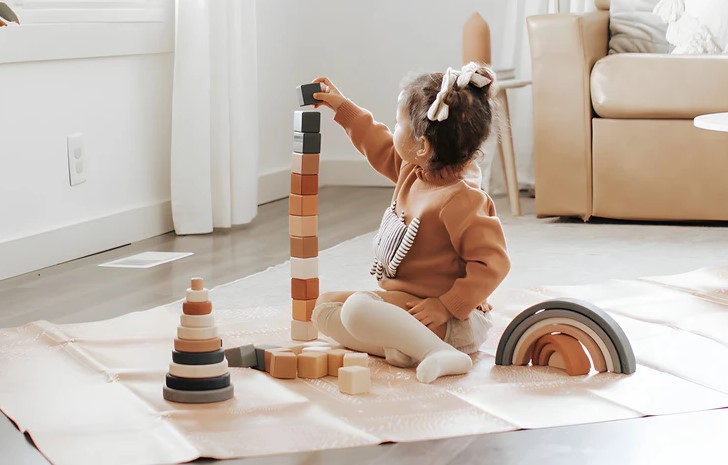
Have you ever wondered what makes educational toys a favorite among educators and parents for early childhood learning? These toys are designed with the principles of the Montessori educational approach. They are more than just playthings. They serve as tools that encourage children to explore and think independently.
Posts on this site may contain sponsored content, paid link placements, or affiliate links. I may earn a commission or fee if you click a link or purchase through these recommendations at no additional cost to you.
These instruments help children learn independently, fostering significant growth in independence and creativity. Montessori toys are essential for young learners. They enable them to interact actively with their learning environment. This article explores these toys’ unique benefits in developing young minds.
The Montessori Method: A Brief Overview
It was developed by Dr. Maria Montessori and is a child-centered educational method stressing hands-on learning and collaborative play. It encourages children to explore activities at their own pace, which is believed to promote a love for learning. They are made to complement this methodology, are typically crafted from natural materials, and are designed to support the development of foundational skills through self-directed activity.
Encouraging Independence with Self-Correcting Toys
They are uniquely crafted to be self-correcting. This means they are designed so that the child can identify and correct their mistakes without adult intervention. For example, puzzle pieces that only fit in the correct places teach problem-solving skills and allow children to manage tasks independently. This autonomy in play builds self-confidence and a sense of achievement, which are critical components in nurturing an independent learner.
Building Motor Skills and Problem Solving
Many are designed to enhance fine motor skills and hand-eye coordination. Toys like threading beads, stacking towers, and shape sorters require children to use small movements to manipulate the pieces. This improves their physical skills and enhances their ability to solve problems independently, paving the way for more complex task handling in the future.
Fostering Creativity Through Open-Ended Play
One of the core advantages of these toys is their ability to support open-ended play. Different from toys with a predetermined use, they can be used in various ways depending on the child’s imagination. For instance, a simple set of wooden blocks can be transformed into a tower, a fort, or a bridge, depending on the child’s creative vision. This flexibility encourages innovative thinking and imagination, which are crucial for creative development.
Sensory Development with Natural Materials
They are often made from natural materials such as wood, metal, cotton, and wool, which are safe and durable and provide various textures for sensory exploration. Sensory play is vital in the early years as it directly ties to brain development. Engaging with different textures, weights, and balances helps children develop their sensory perceptions and cognitive skills, enhancing their learning experience.
Social Skills and Collaborative Learning
Although They are excellent for solo play, many are designed for group settings, promoting social interactions and collaborative learning. Toys that encourage group play require children to communicate, share, and work together towards a common goal, helping them develop essential social skills such as cooperation and empathy.
Montessori toys offer more than just entertainment for children. They are foundational tools that foster independence, creativity, and other skills that benefit early childhood development. By integrating these toys into playtime, parents and educators can provide children with a robust platform for learning and growth that goes far beyond the classroom. As we continue to value the whole child’s development, these toys stand out as instrumental in shaping capable, creative, and independent thinkers for the future.
