
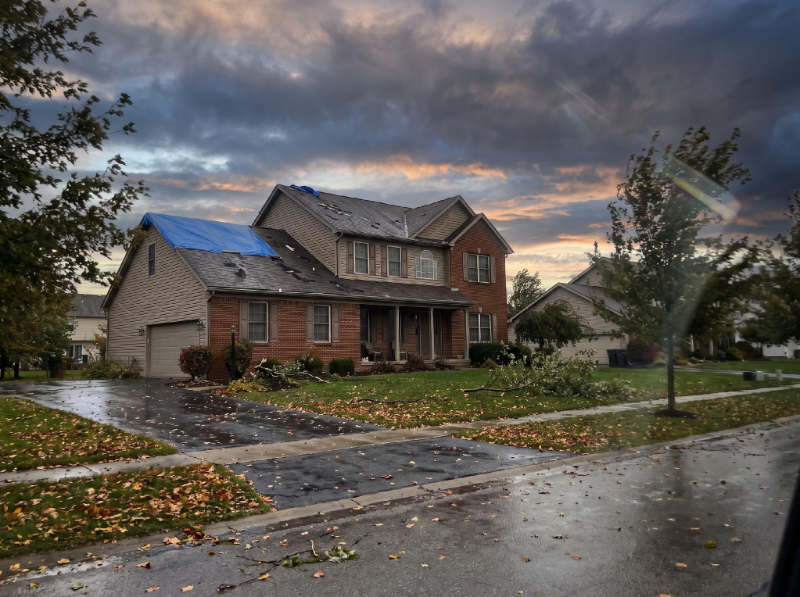
If you’ve spent the last year patching drywall, chasing down roofers, or explaining to your kids why there’s a tarp over half the garage, you’re not imagining things. Ohio has had a rough stretch of weather. Between record tornado activity and a string of hail and wind events that hit the Midwest hard, a lot of Akron-area families are dealing with storm damage for the first time and figuring out the claims process while they’re at it.
This guide walks through when it makes sense to bring in outside help, what to do in the first two days after a storm, and the mistakes that trip up even careful homeowners. None of it requires an insurance background. It just requires knowing what’s coming before it happens.
When a Public Adjuster Makes Sense
Posts on this site may contain sponsored content, paid link placements, or affiliate links. I may earn a commission or fee if you click a link or purchase through these recommendations at no additional cost to you.
Not every claim needs outside help. A cracked gutter or a few missing shingles is usually straightforward to handle on your own. But for larger or more disputed claims, Ohio public adjusting can change the outcome significantly, because a public adjuster works for you, not the insurance company.
Here’s the distinction that trips people up: the adjuster your insurance company sends out is paid by the insurer and is ultimately looking out for the company’s bottom line. A public adjuster is a licensed professional you hire, typically for a percentage of the settlement, who inspects the damage, documents the full scope, and negotiates the claim on your behalf. For a total loss, a complicated roof-and-structure claim, or a case where the insurer’s offer feels low relative to the visible damage, that difference in representation is worth the fee for many families.
Ohio regulates who can do this work. As of September 30, 2025, the state’s Public Insurance Adjuster and Public Insurance Adjuster Agent license applications no longer require notarization, part of an ongoing update to the licensing framework overseen by the Ohio Department of Insurance. That’s a small procedural change, but it reflects a bigger point: this is a licensed profession with real oversight, not an informal side hustle. Before hiring anyone, it’s worth confirming their license status directly with the state.
If you’re staring down a settlement offer that doesn’t match the damage in front of you, or you’re a few weeks into a claim that feels stalled, that’s usually the moment to bring in a local, licensed adjuster rather than keep negotiating alone.
Why Ohio Homeowners Are Filing More Storm Claims Than Ever
The numbers back up what your neighborhood group chat has been saying. The U.S. logged 69,263 storm events in 2025, the second-highest total on record and just behind the 76,893 events recorded in 2011, according to a 2026 storm summary from the Ohio Insurance Agents Association. That’s not a one-off. Ohio has also seen a record number of tornadoes in a recent season, a trend insurance experts say is likely to push homeowner premiums and deductibles higher, per reporting from cwcolumbus.com.
For families, this means more than an inconvenient roof repair. A damaged roof or siding can mean weeks of contractor visits, disrupted routines, and, if you’re not prepared, a drawn-out fight with your insurer over what’s actually covered. If you’ve read our warning signs, your home may already be vulnerable to storm damage. You already know that a lot of storm damage isn’t obvious from the driveway. That’s exactly why the claims process trips people up: they don’t realize how much is wrong until an adjuster points it out, or until it’s too late to document it properly.
The First 48 Hours: Documenting Damage the Right Way
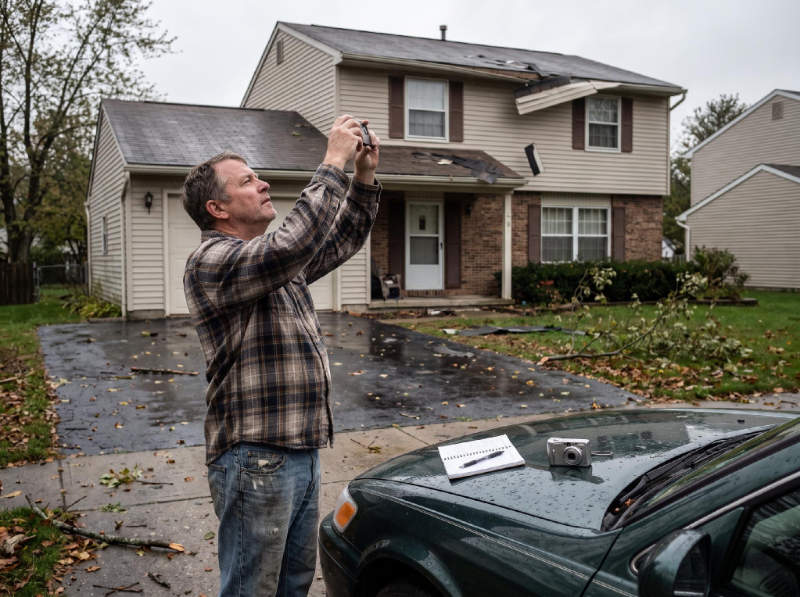
What you do in the first two days after a storm often determines how smoothly your claim goes. Insurers move fast, and so should you, but not in the direction of cleanup. Before you touch anything, photograph and video every angle of the damage: roof, gutters, siding, fences, and anything inside that got wet or broken. Walk the property with your phone the way you’d walk through selling the house, slow and thorough.
A few habits make a real difference here:
Photograph and video the damage before any cleanup begins, including close-ups and wide shots.
Keep a written inventory of damaged items, including receipts or replacement estimates where available.
Contact your insurer within a day or two of the storm, not weeks later.
Avoid tarping, tossing, or repairing anything beyond emergency measures until the adjuster has seen it.
The Ohio Department of Insurance publishes storm recovery guidance for homeowners that covers exactly this kind of documentation, and it’s worth a read before you ever pick up the phone with your carrier. If your family already lived through last winter’s mess, our guide on surviving a hailstorm’s aftermath has more specifics on what hail damage actually looks like once the ice melts and the adrenaline wears off.
Common Mistakes Homeowners Make With Storm Claims
Most people don’t lose money on a storm claim because they did something wrong. They lose money because they didn’t know what they didn’t know. The most common mistake is accepting the insurer’s first settlement offer without question. Initial offers are often based on a quick inspection and don’t always account for damage hidden under shingles or behind siding.
Timing is another trap. Ohio law generally allows up to a year to file a claim for high-wind damage, but that clock usually starts on the date the damage occurred, not the day you noticed it. Several Northeast Ohio roofing contractors flagged January 2026 as the practical deadline for filing claims for 2025 storm damage in Cuyahoga, Lake, and Geauga counties, which caught many homeowners off guard. Waiting to “see if it gets worse” can cost you the whole claim.
Underestimating the scope of damage is common, too, especially with roofs, where a few missing shingles can mask deeper structural issues. And skipping an independent contractor estimate means you’re relying entirely on the insurer’s number. Nationally, about 2.8% of insured homes filed a wind or hail loss claim during the 2019-2023 period, so this isn’t a rare situation. Getting a second opinion before you sign anything is standard practice, not paranoia, according to Forbes Advisor’s explainer on public adjusters.
Getting Your Home (and Family Routine) Back to Normal
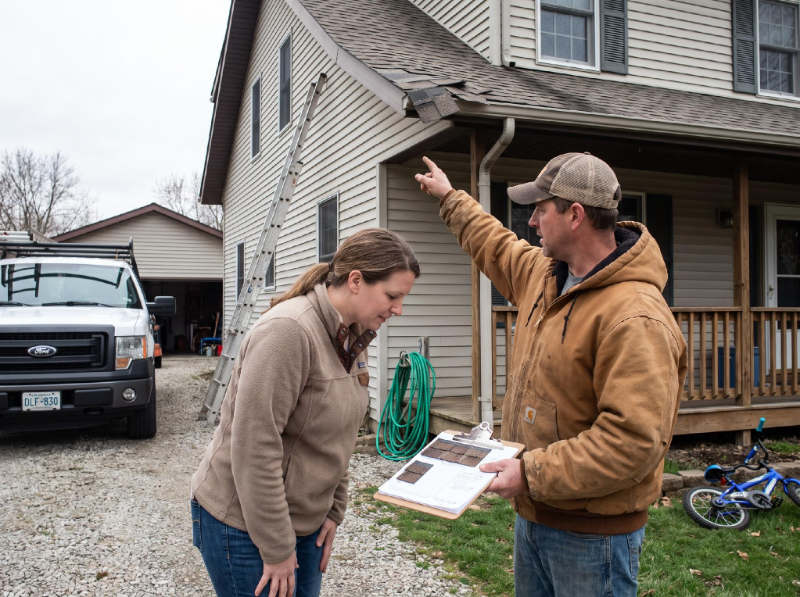
Once a claim is settled, the next challenge is logistics. Repair timelines after a major storm season can stretch out, since contractors across the region are booked solid. It helps to get on a contractor’s schedule as early as possible, even before the settlement is finalized, so you’re not waiting an extra month once the check clears.
Coordinating with contractors post-settlement is its own project, especially with kids and pets in the house. Set clear expectations upfront about noise, work hours, and which parts of the house will be off-limits during repairs. If your roof is old enough that this storm was the final straw, our post on knowing when it’s time for a full roof replacement walks through how to tell a repair from a replacement, which can save you from paying twice.
Conclusion
Storm season in Ohio isn’t letting up anytime soon, and record tornado counts and hail events suggest this is the new normal rather than a rough year. The families who come out of a storm in the best shape are usually the ones who documented early, moved fast on deadlines, and didn’t assume the first number they heard from the insurance company was the final one.
Knowing your options, including when a professional advocate makes sense, is part of protecting your home, just as you’d protect anything else that matters to your family. A little preparation now can save a lot of stress the next time the sky turns green over Akron.
